In today’s environment, nonprofits are navigating shifting government priorities, tighter budgets, and growing expectations from funders. That makes program management and evaluation more important than ever – not just as a reporting requirement, but as a way to strengthen programs, tell your story, and adapt to changing circumstances.
Here are some practical strategies you can put to work.
Program Design: Build the Foundation
Good design sets the stage for effective programs. Focus on clarity and alignment before jumping into delivery.
- Start with the “why.” Clearly define “the problem” your program addresses and who benefits (target population). This keeps your work mission-focused and funder-aligned.
- Engage your community. Talk to the people you serve before finalizing plans. Conduct a Needs Assessment or Asset Mapping to determine what other service providers are in your community to prevent duplication of resources.
- Have a fund development strategy. Diversify your funding streams, make sure you make a connection between funds you are raising with program impact. Continue to building relationships year-round not just when funds are needed.
Program Management: Turn Plans into Action
Once programs are designed, strong management keeps them moving smoothly – especially when teams are small or wearing multiple hats.
- Set program logistics and goals. Plan for unexpected emergencies.
- Identify systems that need support for consistency and quality.
- Track progress and make timely adjustments.
- Have a process to cover gaps in programming.
- Balance flexibility with focus. Stay open to small changes based on feedback, but don’t lose sight of your core goals.
Program Evaluation: Learn and Improve
Evaluation isn’t just about reporting to funders – it's about learning what’s working and why. Keep it simple and useful.
- Pick 2–3 key measures. Focus on data that shows meaningful change (like increased skills, improved access, or community reach). Answer the Why? What? Who? When? How?
- Make data collection routine. Build short surveys or feedback forms into your existing workflows – for example, after workshops or client sessions.
- Pair numbers with stories. Combine your data with participant stories or quotes to show both scale and human impact.
- Share results widely. Don’t just send reports to funders – celebrate wins with your team, board, and community partners.
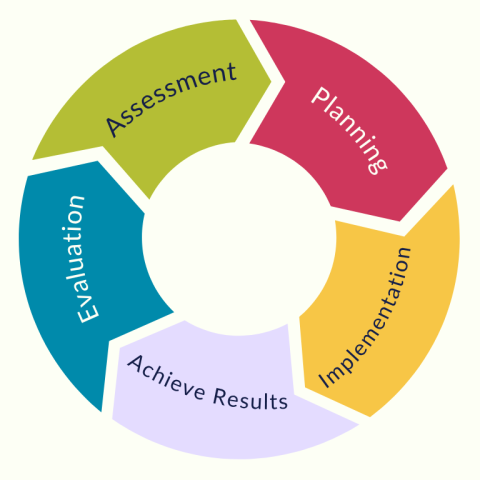
Program design, management and evaluation is a continuous cycle of:
Helpful Resources & Tools
- 5 Tips & Tricks for Gathering Meaningful Data to Drive Improvement
- Nonprofit Management Institute - This virtual cohort helps nonprofit leaders across NC connect and strengthen key management practices – including program design, management and evaluation – while building their organization’s capacity for long-term sustainability. Stay tuned for the next series in April 2026.
